
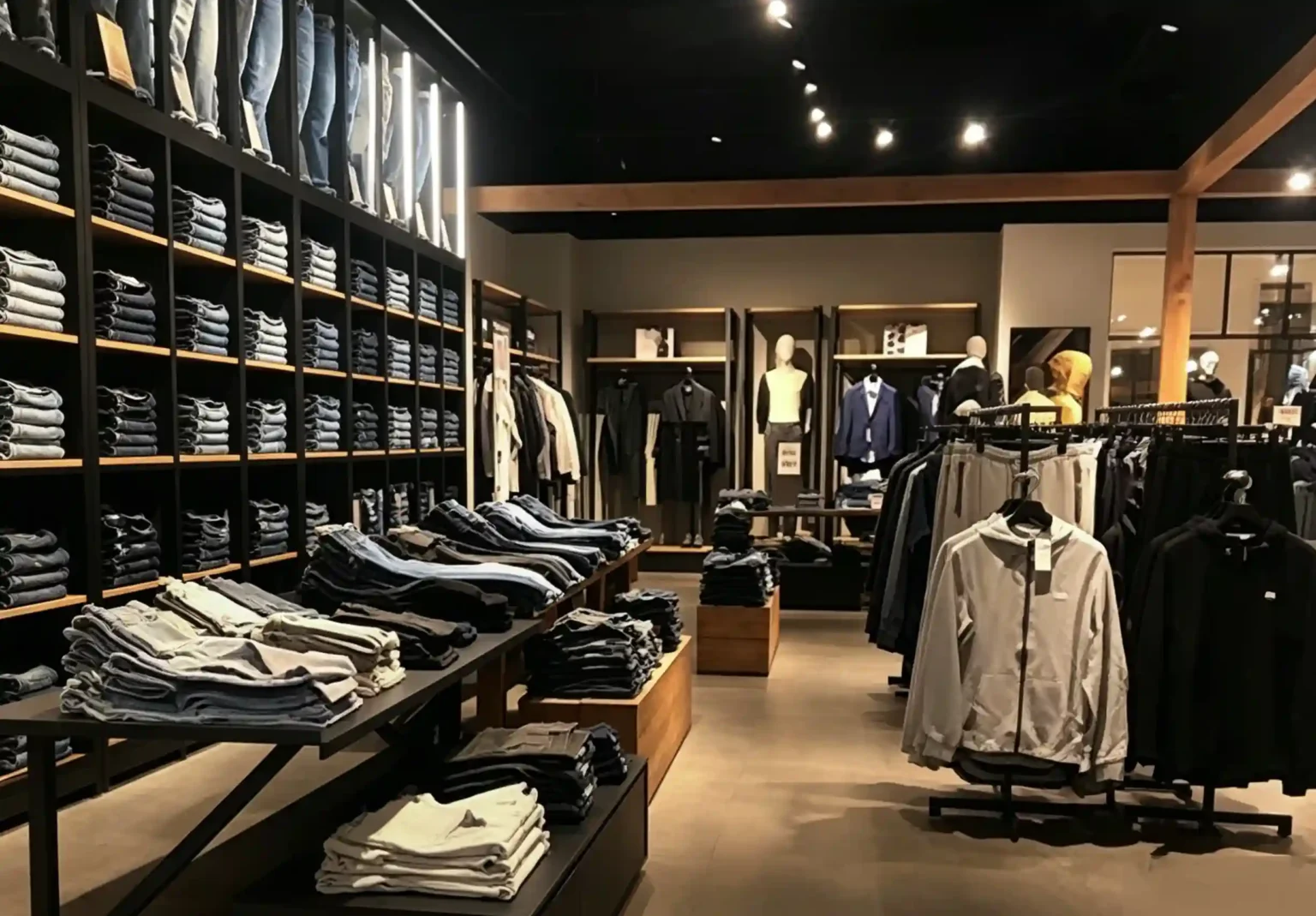
Retail Lighting Guide
Retail Store Lighting Solutions: Fixture Selection for Shop Windows, Shelves, Fitting Rooms and Checkout Areas
Retail lighting should do more than provide sufficient brightness. A practical lighting scheme helps customers notice the store, understand the product display, evaluate colors and materials, and move comfortably between different retail zones.
FANSEN works with overseas project buyers, fit-out contractors, lighting designers and retail brands to review floor plans, reflected ceiling plans, ceiling heights, display layouts and project requirements. Based on this information, we can assist with fixture selection, lighting parameters, samples, customization and delivery planning.
What Should a Retail Lighting Scheme Address?
Lighting requirements vary according to the merchandise, store format, interior materials and customer journey. A fashion store needs accurate color presentation and comfortable fitting-room lighting. A jewellery store requires controlled highlights and careful reflection management. Tile, furniture and building-material showrooms need lighting that reveals surface texture. Supermarkets and convenience stores generally place greater emphasis on shelf visibility, aisle uniformity and operating efficiency.
Make shop windows, key products and vertical shelf surfaces easy to identify.
Present merchandise colors, finishes, textures and details naturally.
Control direct glare and reflections from mirrors, glass and polished materials.
Consider display changes, long operating hours, energy use and maintenance access.
Most retail projects require a combination of ambient, accent, vertical and decorative lighting. One fixture type should not be expected to perform every task.
Lighting Priorities for Different Retail Types
| Retail type | Main priorities | Common fixture approach | Points to check |
|---|---|---|---|
| Fashion and footwear | Fabric color, mannequins, fitting rooms and vertical shelf illumination | Adjustable spotlights, track lights and soft mirror lighting | Color consistency, facial shadows and mirror glare |
| Jewellery and boutiques | Product details, sparkle, controlled contrast and display cases | Narrow or medium-beam spotlights with integrated display lighting | Glass reflections, excessive brightness and product-specific light quality |
| Material showrooms | Surface color, texture, scale and vertical presentation | Track lighting, adjustable spotlights, wall washing and linear lighting | Viewing direction, glossy reflections and beam uniformity |
| Supermarkets and convenience stores | Shelf visibility, aisle uniformity, product identification and efficiency | Linear or wide-beam general lighting with local accent lighting | Shelf-face brightness, dark gaps, energy use and maintenance |
This comparison is a starting point rather than a fixed standard. Final fixture selection should reflect the actual store layout, products, mounting height and design objectives.
Shop Window and Entrance Lighting
The shop window is often the first major visual contact between a customer and the store. It should create enough contrast to attract attention while allowing the merchandise and display theme to remain clearly visible.
Excessive brightness may create glare and strong reflections on the glass. Insufficient brightness may cause the display to disappear into the surrounding environment, particularly in shopping malls or bright commercial streets.
Adjustable LED track lights are useful where window displays change frequently because the fixtures can be repositioned and re-aimed. Narrow beams may be used for individual products, while medium or wider beams can cover mannequins, platforms or larger display backgrounds.
Fixture positions should be checked from the customer’s main viewing direction. The objective is to illuminate the display rather than create distracting reflections of bright light sources in the glass.
Shelf and Merchandise Lighting
Merchandise lighting should help customers identify product colors, materials, labels and details. Illuminating only the floor or aisle may leave the shelf face comparatively dark.
Track-mounted fixtures are suitable for stores where shelving and displays are regularly rearranged. Recessed adjustable LED spotlights provide a cleaner ceiling appearance and are often suitable for stores with relatively fixed displays, but their positions need to be coordinated more accurately during the design stage.
For tall shelves, the lighting design should consider the upper, middle and lower product levels. Fixture setback, aiming angle and beam width influence whether light reaches the shelf evenly or creates excessive brightness in only one area.
Narrow beams can create stronger emphasis but require careful spacing and aiming. Medium beams are often more forgiving for general merchandise displays. The final choice should depend on the size of the display, mounting height and desired contrast.
Lighting for Different Types of Merchandise
Fashion and Footwear Stores
Fashion lighting should present fabrics, leather and product colors naturally. Light should reach the front of hanging garments and mannequins instead of illuminating only the aisle. Medium-beam spotlights can cover clothing racks, while narrower beams may emphasize mannequins, new collections or promotional displays. Lighting consistency between the sales floor and fitting rooms is also important.
Jewellery and Premium Boutiques
Jewellery, watches and small premium products often benefit from controlled accent lighting that reveals detail, shape and surface finish. The beam should match the product and display-case dimensions. Excessive output or unsuitable aiming can produce uncomfortable glare and strong reflections on glass. Because different metals, stones and finishes respond differently to light, sample testing may be useful before final production.
Tile, Furniture and Building-Material Showrooms
Lighting for tiles, stone, timber, wall finishes and furniture should reveal color, texture and surface quality. Even wall washing may suit large flat displays. More directional lighting can reveal the texture of stone or timber, but the angle should be controlled to prevent excessive reflection from glossy surfaces.
Supermarkets and Convenience Stores
Supermarkets and convenience stores generally require continuous aisle lighting, clear product identification and useful vertical illumination on the shelf face. Linear fixtures or wide-beam general lighting can provide the main illumination, while local accent lighting may be used for promotional displays, fresh-food areas or branded sections.
Fitting Room and Mirror Lighting
Fitting-room lighting directly influences how customers perceive clothing and their own appearance. A single high-output ceiling light may create strong shadows around the eyes, face and body. A more balanced solution can combine soft ceiling lighting with illumination from the front or sides of the mirror.
Where recessed ceiling fixtures are required, deep-recessed or appropriately shielded LED downlights can help reduce direct glare. Their positions should be coordinated with the mirror and the customer’s standing position.
The color temperature and color-rendering performance should not differ significantly from the main sales area. Otherwise, the same garment may appear noticeably different inside and outside the fitting room.
Checkout Area Lighting
The checkout area is both a customer-facing zone and a long-term working area for store employees. Lighting should support payment, packaging, product checking and screen use while keeping staff and customer faces naturally visible.
Wide-beam downlights can provide ambient illumination, while linear or adjustable lighting may be used for the counter and branded background. Fixtures should be positioned to reduce reflections on display screens and glossy counter surfaces. The checkout area can be slightly brighter than the general aisle, but it should remain visually connected to the rest of the store.
Aisle and General Lighting
Aisle lighting should support safe movement, product identification and clear circulation between retail zones. General lighting should remain reasonably continuous without strong dark gaps. However, illuminating every part of the store to the same level can flatten the space and weaken product emphasis.
A practical approach is to provide comfortable ambient lighting for circulation while using accent and vertical lighting to increase the visibility of products, shelves and feature displays.
Common Fixture Types for Retail Projects
LED Track Lights
Track lights are suitable for retail spaces where shelves, displays and seasonal layouts change regularly. Fixtures can be moved and re-aimed after installation. Before selection, confirm the track standard, input voltage, wattage, beam angle, dimming method and compatibility between the fixture and track system.
Adjustable LED Spotlights
Adjustable spotlights are commonly used for shop windows, mannequins, shelves, display tables and branded feature walls. The adjustment mechanism should hold the selected aiming angle after installation, and the beam width should match the product size, mounting height and lighting distance.
LED Downlights
Downlights are suitable for entrances, aisles, fitting rooms, checkout areas and other general-lighting zones. Deep-recessed optics or appropriate shielding can help reduce direct glare. Actual visual comfort also depends on fixture position, viewing angle and brightness contrast within the store.
LED Strip Lights and Linear Lighting
LED strip lights and linear fixtures can be integrated into shelves, display cabinets, ceilings, walls and wayfinding details. When installed inside shelving, the light source should be concealed from normal viewing angles. Heat dissipation, mounting profile, power supply position, operating voltage and voltage drop should be evaluated before installation.
Typical Lighting Parameters for Reference
The following ranges can support early product selection, but they should not be treated as fixed standards for every retail project. Final parameters should be confirmed according to merchandise, ceiling height, mounting position, interior materials and project requirements.
Color Temperature
- 2700K–3000K: A warmer atmosphere for boutiques, hospitality-related retail and spaces emphasizing comfort.
- 3000K–3500K: A balance between warmth and product visibility for fashion, furniture and general premium retail.
- 3500K–4000K: A clearer visual environment for supermarkets, convenience stores, material showrooms and modern commercial spaces.
Different color temperatures may be used within the same store, but the transition should remain visually coordinated.
Color Rendering
CRI 80 or CRI 90 may be evaluated for general retail lighting. Fashion, cosmetics, food, furniture and other color-sensitive products often benefit from CRI 90 or above. Some projects may specify CRI 95 or higher. However, CRI alone does not describe every aspect of light quality; the spectrum, merchandise colors and visual result should also be considered.
Beam Angle
- 15°–24°: Individual products, small displays or stronger accent lighting.
- 24°–36°: Mannequins, shelving, display tables and general merchandise presentation.
- 36°–60°: Larger displays, ambient lighting or areas requiring softer transitions.
Higher mounting positions normally require wattage and beam angle to be reassessed. Wattage alone does not determine the illuminated area or visual brightness.
Glare Control
Retail customers view products from multiple directions, so high-brightness light sources should be kept outside the main viewing angles where practical. Depending on the project, glare control may involve deep-recessed optics, shielding cups, honeycomb accessories, suitable cutoff angles and careful fixture positioning. The final aiming direction of track lights and adjustable spotlights should be checked after displays are installed.
Dimming and Lighting Control
Retail lighting may use simple switching, zone control, 0–10V, DALI or other dimming systems depending on operating requirements. Typical zones include shop windows, merchandise and shelf lighting, aisles, fitting rooms, checkout areas, and cleaning or maintenance lighting. Where dimming is required, the driver, control protocol and wiring method should be confirmed before fixture production.
Information Required Before Fixture Selection
- Store floor plan
- Reflected ceiling plan
- Ceiling height and ceiling structure
- Shelf, display and checkout locations
- Merchandise type and display method
- Shop-window dimensions and viewing direction
- Wall, floor and product-surface materials
- Target color temperature and color-rendering requirements
- Dimming or lighting-control requirements
- Project quantity, certification and delivery schedule
More complete project information allows the fixture type and main parameters to be confirmed earlier, reducing unnecessary changes after installation.
How FANSEN Supports Retail Lighting Projects
FANSEN provides project-based support for overseas retail brands, lighting companies, distributors, project buyers and fit-out contractors. Depending on the available information, our support can include:
- Fixture recommendations for different retail zones
- Suggestions for wattage, lumen output, color temperature, CRI and beam angle
- Optical recommendations based on mounting height and display position
- LED spotlights, downlights, track lights and linear-lighting products
- Samples for checking dimensions, light color, beam distribution and installation
- OEM/ODM support, including product parameters, finishes, branding and packaging
- Driver and dimming compatibility confirmation
- Sample preparation, batch production and phased delivery planning
- Product specifications, packing information and project delivery documents
Final fixture selection should be coordinated with the project designer, site conditions and applicable local requirements. For important display areas, sample testing is recommended before batch production.
Retail Project Enquiry
Contact FANSEN About Your Retail Lighting Project
If you are planning a fashion store, boutique, jewellery store, tile showroom, furniture showroom, supermarket, convenience store or another retail space, send us your floor plan, reflected ceiling plan, ceiling height, display layout, merchandise type, required quantities, dimming requirements and delivery schedule.
Based on this information, we can assist with fixture selection, key lighting parameters, sample preparation and project delivery planning.
Contact FANSEN