
Commercial Space Lighting Solutions: Fixture Selection for Reception Areas, Showrooms, Lounges, Corridors and Multi-Use Spaces
Commercial lighting is not only about providing sufficient brightness. Different areas within the same project may require different lighting priorities, including visual comfort, product presentation, material appearance, circulation guidance, flexibility, and lighting control.
For project buyers, contractors, lighting design companies, distributors, and engineering clients, fixture selection should begin with the function of each area rather than applying the same lighting approach throughout the entire project.
This guide provides a practical reference for selecting and coordinating lighting fixtures across common commercial areas. Final specifications should be confirmed according to project drawings, ceiling conditions, interior materials, installation environment, control requirements, lighting calculations, and applicable local standards.
1. Entrance and Reception Areas
The entrance and reception area usually forms the first visual impression of a commercial space. Lighting should provide clear orientation while making reception desks, logos, feature walls, and key architectural elements easy to identify.
General lighting can be provided by anti-glare LED downlights, while LED spotlights can be added where reception counters, artwork, logos, or decorative elements require additional emphasis.
For spaces with ceiling details or reception furniture, concealed LED strip lights or LED linear lights can also be used as supplementary indirect or architectural lighting.
The objective is not simply to make the entrance brighter, but to establish a clear visual hierarchy between circulation areas and important focal points.
2. Lobby and Public Lounge Areas
Lobbies and lounge areas often require a more comfortable and relaxed lighting environment than entrances or product display areas.
A combination of general, accent, and indirect lighting can create better visual balance. Anti-glare downlights can provide basic illumination, while spotlights can emphasize artwork, plants, textured walls, or selected furniture.
LED strip lights or linear lights can be integrated into ceiling details, wall features, shelving, or furniture to provide softer supplementary illumination. In lounge areas, excessive brightness contrast and direct glare should be avoided, particularly where people remain seated for longer periods.
3. Showrooms and Product Display Areas
Showrooms usually require greater lighting flexibility because display layouts, products, and promotional themes may change over time.
LED track lights are particularly useful in these areas because fixture positions and aiming directions can be adjusted according to the display arrangement. Spotlights can create visual emphasis on individual products, while wider light distributions can support larger displays or general circulation areas.
When products have glossy, metallic, glass, or highly reflective surfaces, fixture position and aiming angle should be carefully considered to reduce disturbing reflections.
4. Wall and Material Displays
Lighting for walls is especially important in material showrooms, furniture stores, tile showrooms, surface-material displays, and other spaces where texture and finish influence purchasing decisions.
The lighting method should depend on what needs to be presented. More uniform wall illumination can help customers evaluate overall color and surface consistency, while directional lighting can reveal texture, relief, grain, and other three-dimensional characteristics.
LED spotlights, track lights, or linear lighting may be selected according to wall height, display dimensions, mounting distance, and the required visual effect. For material displays, color rendering should also be considered because poor color reproduction may affect how customers perceive finishes and product colors.
5. Discussion and Meeting Areas
Discussion and meeting areas require lighting that supports face-to-face communication, document viewing, screen use, and longer periods of occupancy.
General lighting should be comfortable and relatively uniform, without excessive brightness directly above or in front of seated occupants. Anti-glare downlights can be combined with indirect linear lighting where appropriate. For meeting rooms with presentation screens, separate lighting control can make it easier to adjust the environment for different activities.
6. Cashier and Service Areas
Cashier counters and service desks require sufficient task lighting for payment, document handling, product packing, and staff operation. At the same time, these areas are often important visual destinations within a commercial space.
A combination of general lighting and localized lighting can make the counter easy to identify without creating unnecessary brightness in the surrounding area. Where shelves or display cabinets are integrated into the counter area, LED strip lights or compact linear lighting can provide additional product illumination.
7. Corridors and Circulation Areas
Corridor lighting should support safe and intuitive circulation without requiring the same lighting level as primary display or working areas.
Anti-glare downlights are commonly used for general circulation lighting. Linear or concealed strip lighting may also be incorporated into ceilings, walls, skirting details, or architectural features where appropriate. Fixture spacing should be coordinated with ceiling height and corridor width to avoid obvious bright and dark patches.
8. Multi-Use Spaces
Some commercial spaces are used for different activities throughout the day. A showroom, for example, may also be used for presentations, customer events, training sessions, or temporary displays.
For these areas, flexibility is often more important than maintaining one fixed lighting scene. Track lighting, separately controlled lighting groups, and dimmable fixtures can help adapt the same space to different functions. Where layouts change frequently, fixture accessibility and future adjustment should also be considered during the initial lighting plan.
9. Coordinating Artificial Lighting with Natural Light
Commercial spaces with large windows, glass façades, or skylights can experience significant changes in natural light throughout the day.
Lighting design should therefore consider both daytime and evening conditions rather than evaluating artificial lighting independently. Areas close to windows may require less artificial light during daytime, while deeper areas of the space may still require supplementary illumination.
Dimming or zoning can help reduce unnecessary energy use while maintaining a more consistent visual environment as daylight conditions change.
10. Commercial Area Lighting Reference
The following illuminance ranges are preliminary planning references only. They are not fixed requirements for every commercial project. Final illuminance targets should be confirmed according to space function, task requirements, surface reflectance, project specifications, lighting calculations, and applicable local standards.
| Commercial Area | Preliminary Illuminance Reference | Typical Lighting Approach |
|---|---|---|
| Entrance / Reception | 200–300 lx | Downlights + accent lighting |
| Lobby / Lounge | 100–300 lx | Downlights + indirect / decorative lighting |
| Product Display Area | 300–750 lx | Track lights + spotlights |
| Wall / Material Display | 300–750 lx | Spotlights / track lighting / linear lighting |
| Meeting / Discussion Area | 300–500 lx | Anti-glare downlights + supplementary lighting |
| Cashier / Service Counter | 300–500 lx | General + localized task lighting |
| Corridor / Circulation | 100–200 lx | Downlights / linear lighting |
| Multi-Use Area | 200–500 lx | Flexible, zoned or dimmable lighting |
11. Fixture Parameters for Early Project Selection
Color Temperature
Warm or neutral white light can be selected according to interior materials, brand positioning, and the desired atmosphere.
Color Rendering
Higher color rendering performance can be useful for retail products, materials, artwork, furniture, and other applications where accurate color appearance is important.
Beam Distribution
Narrower distributions can support accent lighting, while wider distributions can provide broader coverage.
Dimming and Control Compatibility
Control requirements should be confirmed early because they may affect driver selection, wiring, control systems, and fixture compatibility.
These parameters should be selected according to the actual project rather than applying one specification throughout all commercial areas.
12. Glare and Reflection Control
Commercial lighting should consider both direct glare from luminaires and reflected glare from interior surfaces. Deep-recessed or anti-glare optical designs can improve visual comfort in areas where occupants have direct sightlines toward ceiling fixtures.
Reflective materials such as glass, polished stone, glossy tiles, metal, mirrors, and display screens require additional attention to fixture positioning and aiming. The objective is not to eliminate every reflection, but to control unwanted reflections that interfere with product viewing or visual comfort.
13. Dimming and Lighting Control
Commercial projects may benefit from separating lighting into functional zones such as reception, display, circulation, meeting, and decorative lighting.
Depending on project requirements, lighting can be controlled through simple switching, group control, dimming, or compatible lighting management systems. The control strategy should be confirmed before final fixture selection, particularly when specific dimming protocols or centralized control systems are required.
14. Lighting Considerations for Different Commercial Space Types
Different commercial projects may use similar fixtures, but their lighting priorities can be very different.
| Space Type | Main Lighting Priority | Typical Fixture Combination |
|---|---|---|
| Retail Store | Product presentation + flexibility | Track lights + spotlights + linear/strip lighting |
| Showroom | Display + material presentation | Track lights + spotlights + wall/linear lighting |
| Hotel Public Area | Comfort + atmosphere | Anti-glare downlights + spotlights + indirect lighting |
| Restaurant / Café | Atmosphere + table/feature lighting | Downlights + spotlights + decorative/strip lighting |
| Office / Meeting Space | Visual comfort + task lighting | Anti-glare downlights + linear lighting |
| Multi-Use Commercial Space | Flexibility + scene control | Track lights + dimmable/general lighting |
15. Service Areas, Storage Rooms and Safety-Related Lighting
Not every area of a commercial project should be handled using the same decorative or general lighting approach.
Storage rooms, equipment rooms, utility areas, and other back-of-house spaces may have different requirements for durability, maintenance, environmental protection, and illumination.
For damp, dusty, or otherwise demanding environments, fixture construction and the required IP rating should be selected according to the actual installation environment and project requirements.
Emergency lighting, escape-route lighting, exit signs, and other safety-related lighting must be specified according to applicable fire, electrical, building, and local regulations. These systems should be reviewed separately and should not be selected solely according to the general commercial lighting recommendations provided on this page.
16. FANSEN Support for Commercial Lighting Projects
FANSEN supports commercial lighting projects for project buyers, contractors, lighting design companies, distributors, and engineering clients. Support can be provided from early fixture selection through production and subsequent replenishment, depending on the project and order requirements.
Fixture Selection and Parameter Recommendations
Based on available drawings, fixture schedules, ceiling information, application areas, and project requirements, we can assist with selecting suitable fixture types and discussing specifications such as wattage, color temperature, CRI, beam angle, dimming method, installation method, and appearance.
Sample Confirmation
For projects requiring product verification before bulk production, samples can be prepared according to confirmed specifications so that the buyer can check dimensions, finish, installation compatibility, lighting performance, and other relevant details.
OEM/ODM Support
Our OEM/ODM support can cover product configuration, wattage, color temperature, CRI, beam angle, dimming options, voltage, appearance, branding, and packaging according to confirmed order requirements and technical feasibility.
Production and Delivery
After sample or specification confirmation, production can be arranged according to the confirmed order details. Production schedules and delivery arrangements are coordinated according to order quantity, customization requirements, and agreed project timing.
Quality Inspection
Product specifications and key performance items can be checked during production and before shipment according to the confirmed order requirements. For project orders, relevant checks may include appearance, electrical operation, lighting performance, configuration consistency, and packaging according to the agreed inspection requirements.
Phased Delivery
For projects with different installation stages or delivery schedules, phased shipment can be discussed according to order quantity, production planning, stock conditions, and project requirements.
Replenishment Support
For distributors, contractors, and projects requiring later additions or replacement quantities, product specifications and order information can be retained to support subsequent replenishment and help maintain product consistency where feasible.
17. Contact FANSEN for Your Commercial Lighting Project
If you are sourcing lighting fixtures for a retail store, showroom, hotel public area, restaurant, office, or multi-use commercial project, Contact FANSEN with your available project information.
Useful information may include drawings, fixture schedules, installation dimensions, target specifications, quantities, control requirements, required delivery time, and any customization requirements.
Based on the available information, we can discuss suitable fixture options, sample requirements, product configurations, customization, production, and delivery arrangements.
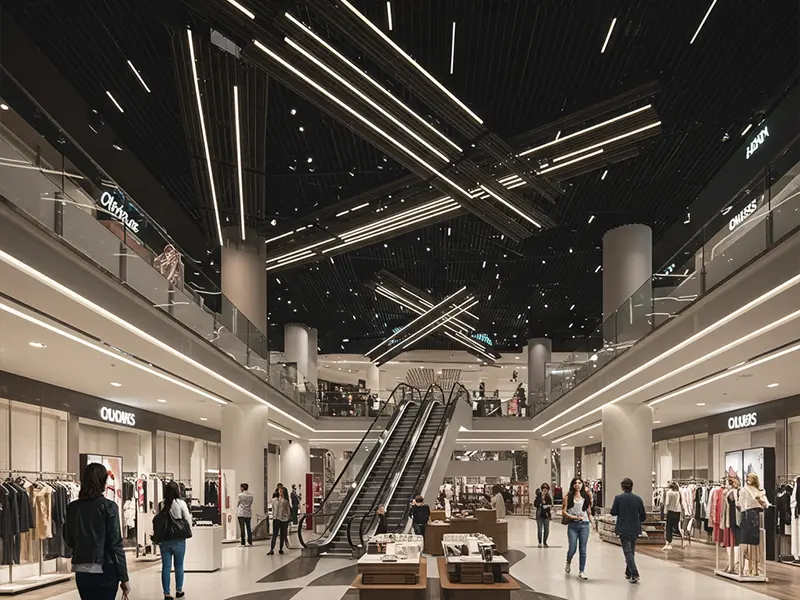
Mall, showroom and public corridor
Use efficient general lighting plus accent lighting for commercial visibility.
Malls, showrooms and commercial corridors need clear brightness, consistent fixture quality and visual highlights. Downlights, track lights, linear lighting and wall washing can make public spaces feel cleaner and more premium.
High lumen downlightTrack spotlightLinear lightingWall washer
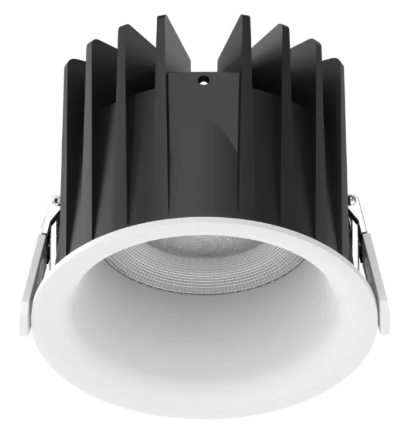
High Efficiency Downlight
More usable brightness for commercial areas while helping reduce power consumption.
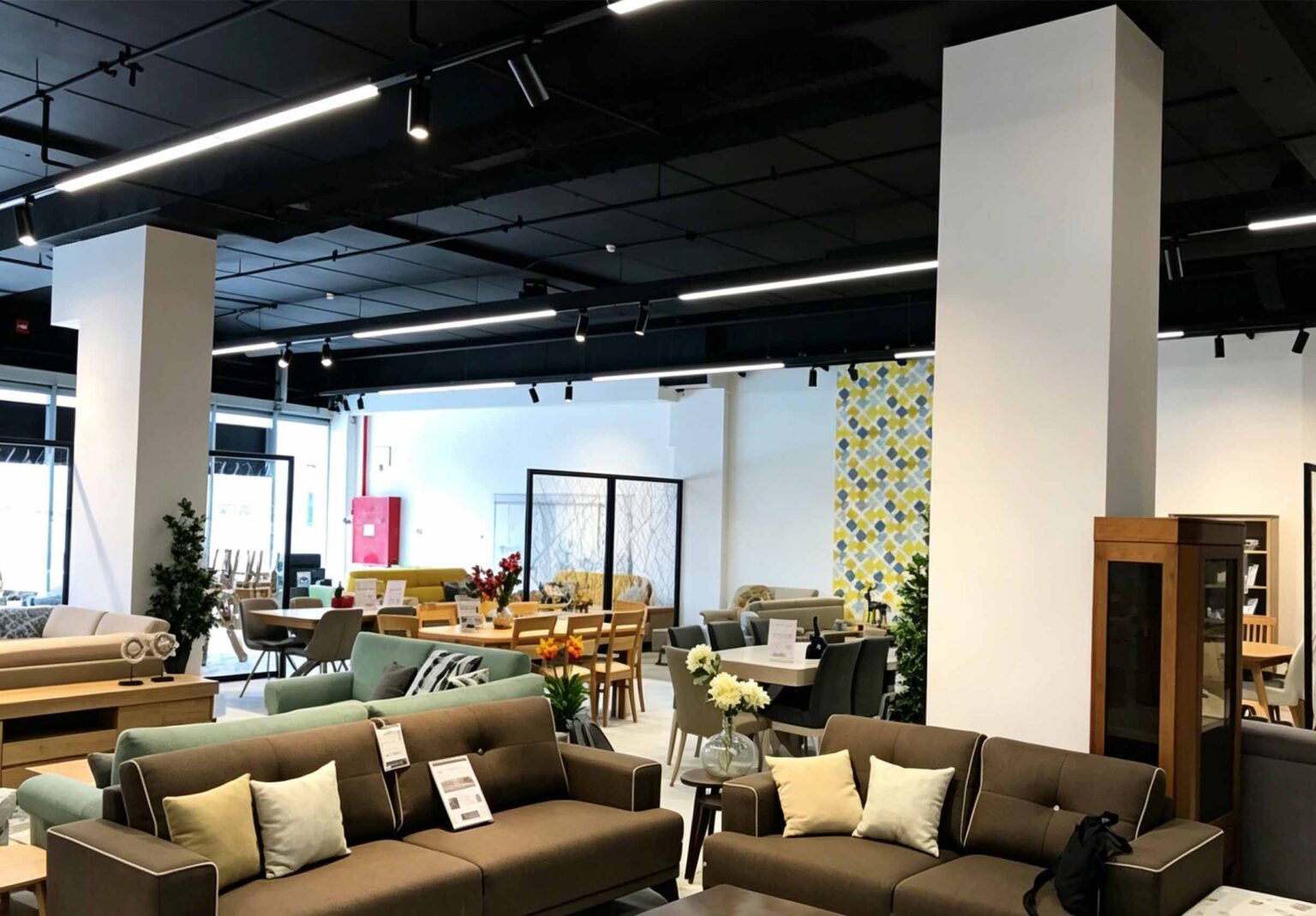
Commercial Track Lighting
Flexible accent lighting for showrooms, displays and branded spaces.
Linear Lighting Option
Clean architectural light for corridors, ceilings and public areas.

Why this setup works
Consistent brightness and easier project supply for commercial spaces.
Commercial projects need products that can scale across many rooms, floors and application areas.
Improve space visibility
Good general lighting helps customers and visitors navigate commercial spaces clearly.
Highlight key areas
Accent lighting helps emphasize displays, reception walls and brand zones.
Reduce long-term cost
High-efficiency LED fixtures help lower energy use in large commercial areas.
Support bulk projects
Consistent products, samples and specifications help contractors manage projects faster.
Office, retail and service areas
Match lighting by zone instead of using one fixture everywhere.
Commercial projects often include offices, stores, corridors, reception areas and service rooms. Matching fixtures by zone improves comfort, appearance and energy performance.
Office lightRetail display lightCorridor lightService area light
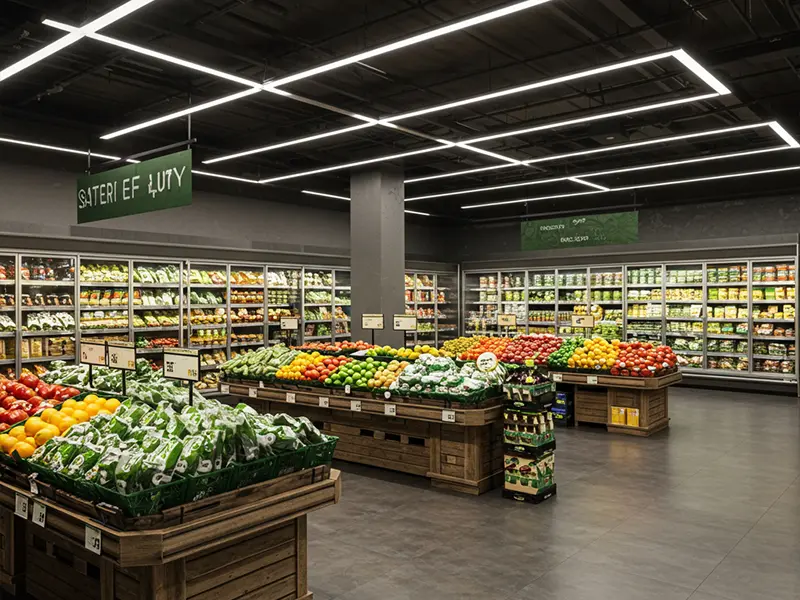
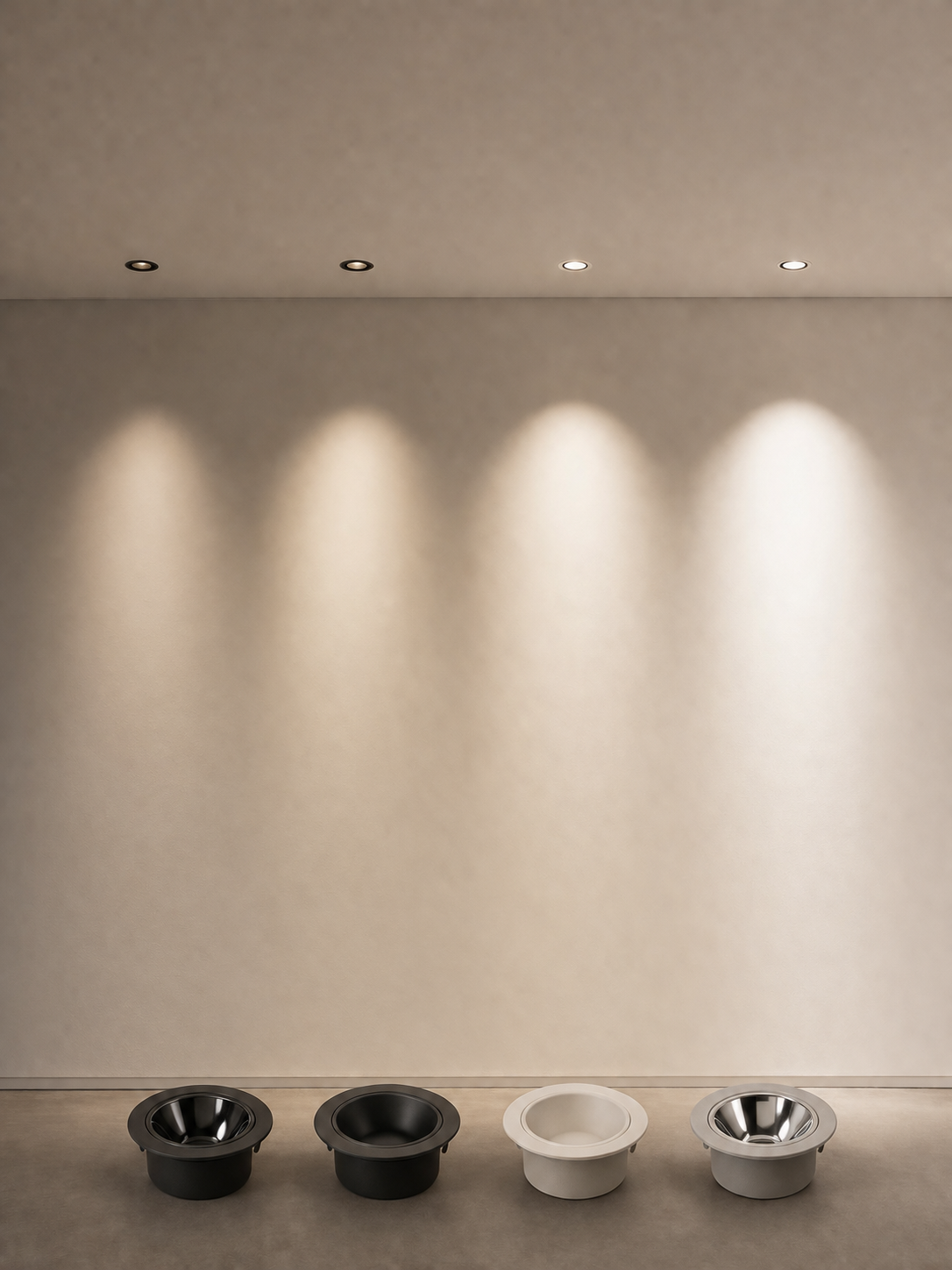
Anti-glare Downlight
Comfortable light for offices, corridors and customer-facing public areas.

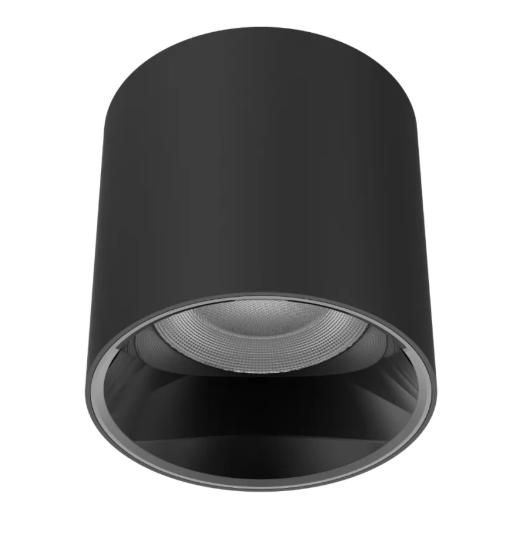
Surface-mounted Light
Useful for renovation and commercial ceilings without recessed installation.
Project Supply Support
Lighting matching and manufacturing support for larger commercial orders.
Commercial project support
Lighting options for commercial contractors, wholesalers and project buyers.
Share your project type, ceiling height, fixture list or target wattage. We can help match LED downlights, spotlights, track lighting, strip lights and linear lighting.
Project supply advantages
Support for commercial lighting projects.
FOSILIGHT supports product selection, sample confirmation, custom specification and bulk supply for commercial projects.
High lumen output
Suitable for larger public spaces and high-traffic areas.
Multiple product families
Downlights, spotlights, track lights, strip lights and linear options.
Reliable supply
Support for contractors, wholesalers and lighting brands.
OEM / ODM
Customized specification, packaging and private label support.
Need commercial space lighting solutions for a project?
Share your project type, area, quantity, wattage target, CCT requirement or lighting drawing. FOSILIGHT can recommend suitable LED lighting options for your project.