
IP44 vs IP65 LED Downlights: Which One Should You Choose?
Introduction
Not every LED downlight requires the same level of protection.
For dry indoor spaces, a standard downlight is often sufficient. However, bathrooms, kitchens, balconies and other humid environments may require fixtures with higher protection against moisture and dust.
This guide explains the differences between IP44 and IP65 LED downlights and how to choose the right protection level for different applications.
1. What Does an IP Rating Mean?
An IP rating indicates how well a lighting fixture is protected against dust and water.
The first digit represents protection against solid objects such as dust, while the second digit represents protection against water.
Understanding IP ratings helps ensure that the selected downlight is suitable for its installation environment.
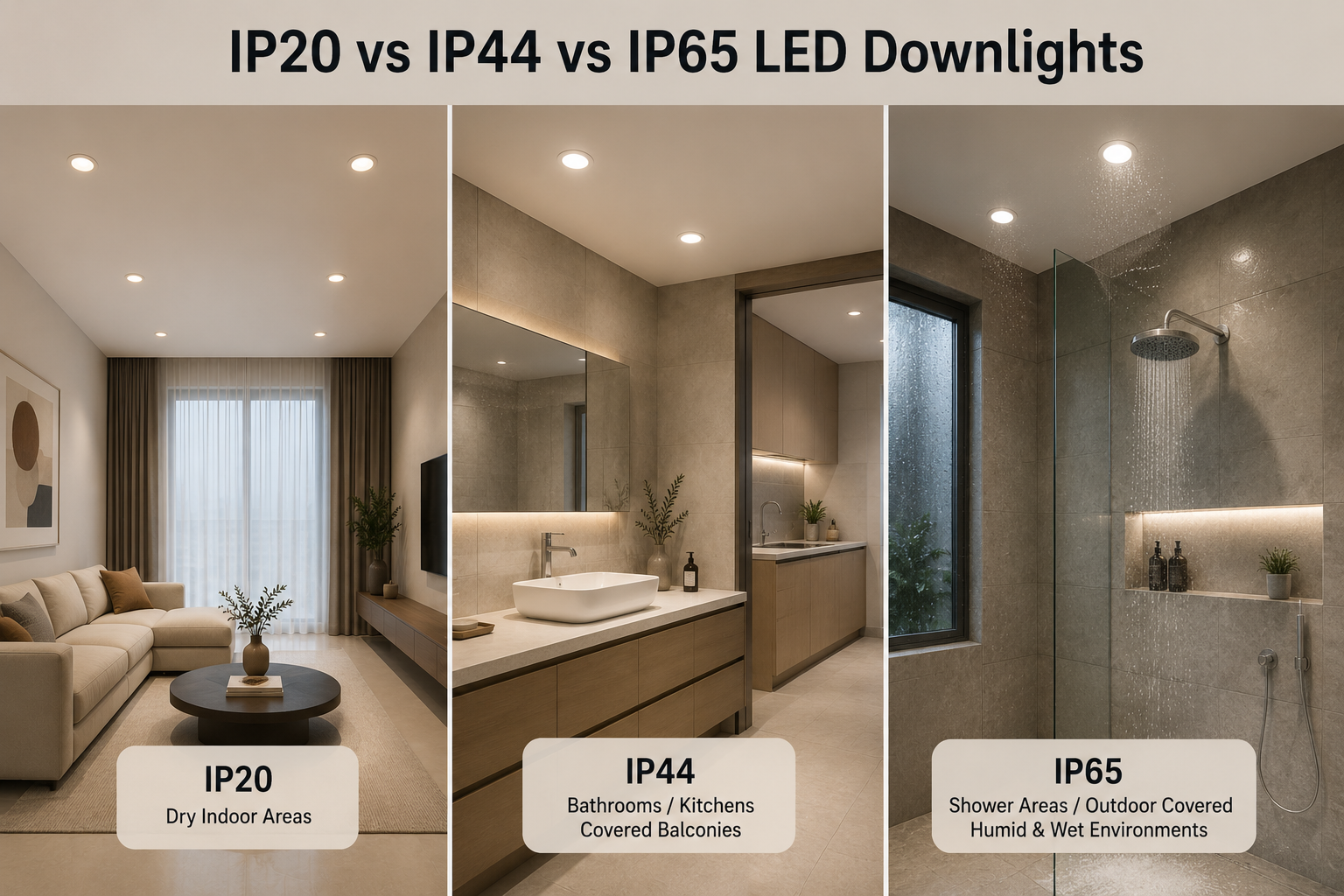
2. When Is IP44 Enough?
IP44 downlights are commonly used in indoor areas where occasional moisture may be present.
Typical applications include:
- Bathrooms
- Kitchens
- Covered balconies
- Residential interiors
They provide suitable protection for most everyday indoor environments without direct exposure to heavy water.
3. When Should You Choose IP65?
IP65 downlights provide a higher level of protection against dust and water.
They are recommended for areas where fixtures may be exposed to water spray or harsher environmental conditions.
Typical applications include:
- Shower areas
- Outdoor covered ceilings
- Commercial washrooms
- Humid commercial spaces
4. Choosing the Right Protection Level
Higher IP ratings are not always necessary.
Selecting the appropriate protection level based on the installation environment helps balance performance, cost and long-term reliability.
For most indoor living areas, a standard downlight is sufficient, while wet environments benefit from higher protection.
5. Typical Applications
| Protection Level | Typical Applications |
|---|---|
| IP20 | Living rooms, bedrooms, offices, retail spaces |
| IP44 | Bathrooms, kitchens, covered balconies |
| IP65 | Shower areas, outdoor covered ceilings, humid commercial environments |
Conclusion
Choosing the correct IP rating helps ensure that LED downlights perform reliably in different environments.
Rather than selecting the highest protection level for every project, it is better to match the IP rating to the installation conditions.
This approach improves safety, durability and cost efficiency while achieving the best lighting solution.