
Wall lighting can look simple on a drawing, but the final result depends on much more than wattage. A standard spotlight may create a strong bright area near the ceiling and darker gaps between fixtures when it is used to wash a continuous wall. An asymmetric wall washer is designed differently: it directs more light toward the vertical surface instead of distributing the beam evenly below the fixture.
This guide explains the difference between an asymmetric wall washer and a standard spotlight, where each type is best used, and which project information should be checked before choosing the fixture position, size and power.
What Is an Asymmetric Wall Washer?
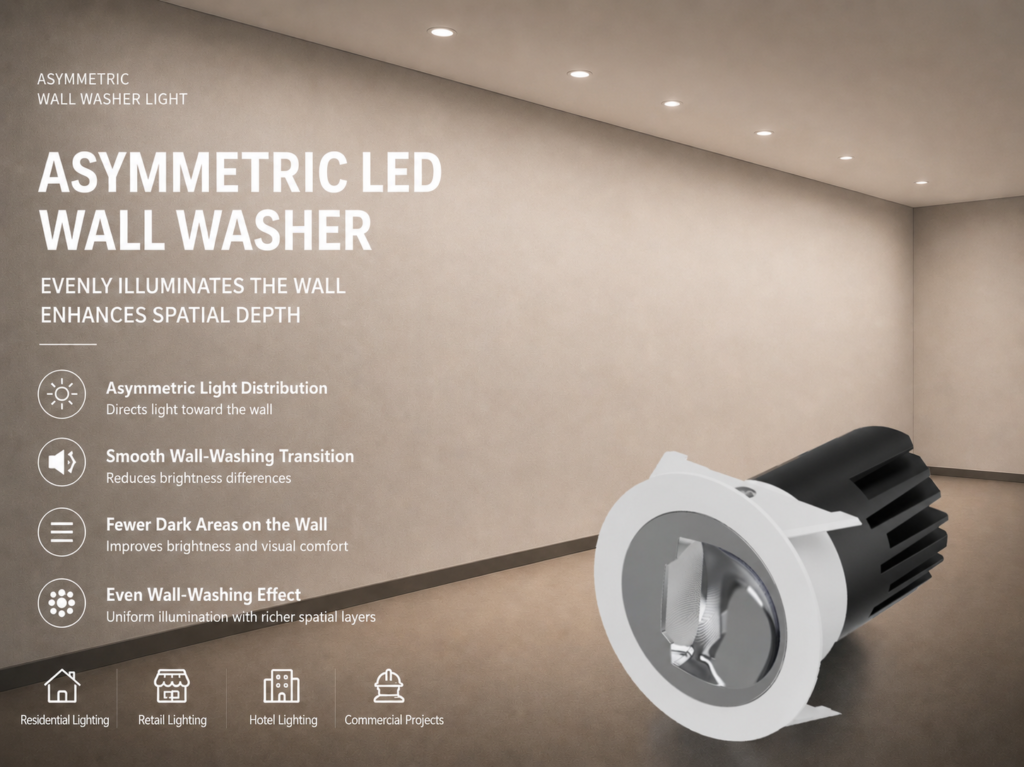
An asymmetric wall washer uses an optical structure that sends more light toward one side of the fixture. When installed in the correct direction, the light is guided toward the target wall, display surface or architectural feature.
This does not mean every asymmetric fixture will automatically produce a perfectly even wall. The final result is still affected by the wall height, fixture-to-wall distance, spacing between fixtures, ceiling height, surface color, surface reflectance and installation direction. However, asymmetric distribution is specifically intended for vertical-surface lighting and can reduce the amount of light wasted directly below the fixture.
Why Can a Standard Spotlight Create Uneven Wall Lighting?
A standard spotlight normally uses symmetrical light distribution. Its beam is centered on the aiming direction, making it suitable for artwork, displays, tables and other specific objects. It can also be used near a wall, but the installation position and aiming angle become very important.
When a standard spotlight is installed too close to the wall, the upper section may become much brighter than the lower section. When the spacing between fixtures is too large, separate cone-shaped bright areas and dark gaps may appear. If the beam is too narrow, the light may highlight only a small part of the wall instead of creating continuous illumination.
These problems do not mean that a standard spotlight is unsuitable for wall lighting. It is often the right choice for focused accent lighting. The key is to decide whether the project needs to highlight an individual object or illuminate a broader vertical surface.
Asymmetric Wall Washer vs Standard Spotlight
| Comparison | Asymmetric Wall Washer | Standard Spotlight |
|---|---|---|
| Light distribution | Directs more light toward one side and the target wall | Symmetrical beam centered on the aiming direction |
| Main purpose | Continuous walls, textured surfaces and display areas | Artwork, products, furniture and focused objects |
| Fixture adjustment | Correct optical direction must face the wall | Fixture head or beam direction may need adjustment |
| Visual result | Designed to spread light over a vertical surface | More likely to create an individual accent beam |
| Project information required | Wall height, wall distance, spacing and installation direction | Target position, aiming angle, beam angle and installation distance |
Where Should an Asymmetric Wall Washer Be Used?
Asymmetric wall washers are suitable when the wall or vertical surface is part of the lighting design rather than only a background. Typical applications include:
- Villa and apartment feature walls
- Hotel rooms, corridors and public areas
- Retail display walls and shelves
- Showrooms and galleries
- Restaurant and club textured walls
- Artwork or decorative wall surfaces that require broader coverage
- Architectural materials where texture and finish should be visible
For a single small painting or product display, an adjustable spotlight may still be more suitable. For a long wall or repeated display surface, an asymmetric wall washer can make the lighting layout easier to coordinate.
Six Factors to Check Before Planning Wall Lighting
1. Wall Height
A taller wall normally requires a different fixture position, output and spacing from a low residential wall. The illuminated height should be defined before selecting the model.
2. Fixture-to-Wall Distance
There is no single wall distance that is correct for every project. A position that works in a 2.7-metre residential room may not produce the same result in a hotel lobby or high-ceiling retail space. The optical design and required wall coverage must be considered together.
3. Spacing Between Fixtures
Spacing affects whether the light overlaps smoothly or forms separate bright and dark areas. Wider spacing may reduce fixture quantity, but it can also make the wall look uneven.
4. Wall Material and Color
Light-colored matte paint, dark stone, timber, glossy tile and textured finishes reflect light differently. A layout should be reviewed according to the actual material instead of using only a standard spacing rule.
5. Required Lighting Effect
Continuous wall washing, texture emphasis and focused artwork lighting are different tasks. The required effect should be agreed before deciding between an asymmetric wall washer and a standard spotlight.
6. Installation Direction
An asymmetric optic must face the intended wall. Incorrect orientation can direct the light away from the target surface and change the expected result.
How to Select the FST-OC03 Size and Power
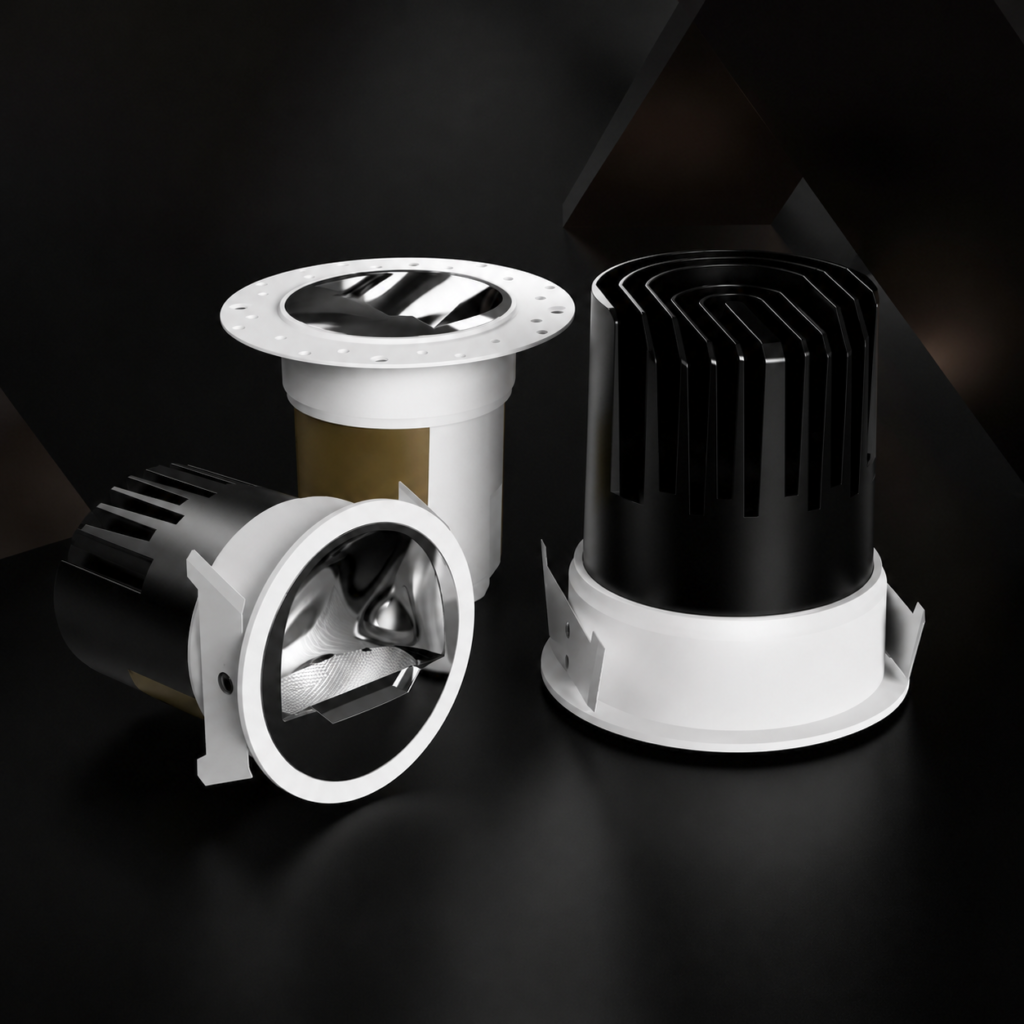
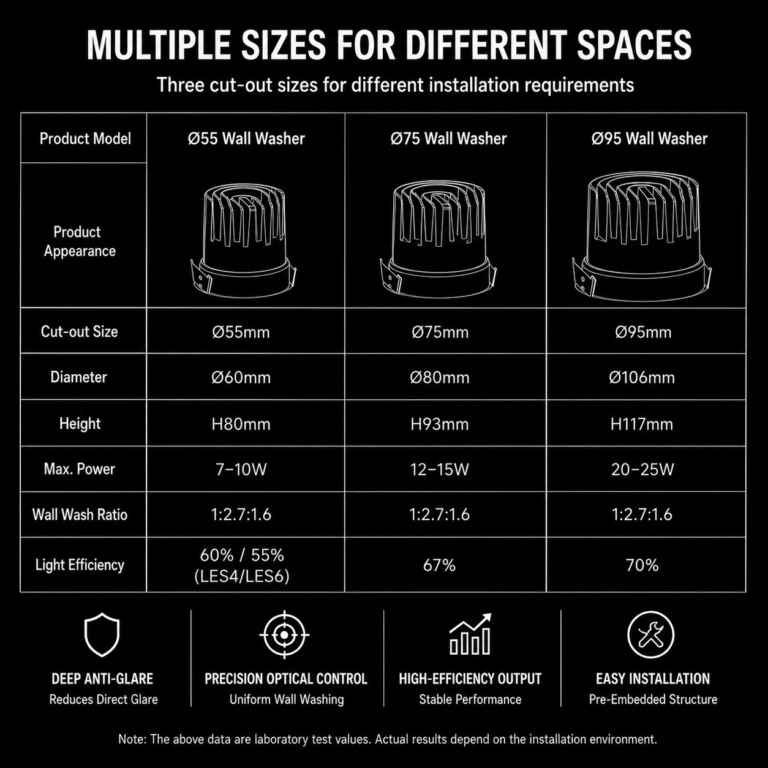
FST-OC03 asymmetric recessed LED wall washer is available in trim and trimless versions with three product sizes. The table below can be used for initial model comparison.
| Product Size | Cut-out Size | Power Range | Initial Selection Reference |
|---|---|---|---|
| Ø60 × H80mm | Ø55mm | 7–10W | Small feature walls, artwork and compact display areas |
| Ø80 × H93mm | Ø75mm | 12–15W | Residential, hotel and medium retail wall applications |
| Ø106 × H117mm | Ø95mm | 20–25W | Taller walls or projects requiring higher output |
These recommendations are for initial comparison only. The final size and power should be confirmed according to the wall height, fixture-to-wall distance, spacing, target brightness, ceiling opening and sample result.
FST-OC03 Asymmetric Recessed LED Wall Washer
Available in trim and trimless versions, with 7–25W power options and three ceiling cut-out sizes. Use the product page to review the available sizes, finishes and project application information.
Trim or Trimless: Which Version Should You Choose?
The trim version is normally easier to install and can help cover the edge of the ceiling cut-out. It is suitable for renovation work and projects where installation convenience is important.
The trimless version integrates the visible frame into the ceiling finish for a cleaner appearance. It should be selected only when the ceiling construction, plastering process and installation sequence can support trimless mounting. The installation accessory and finishing method should be confirmed before ceiling work begins.
Common Wall-Washing Mistakes
- Using a fixed wall distance without considering ceiling and wall height
- Selecting wattage without checking beam distribution and spacing
- Installing the asymmetric optic in the wrong direction
- Using a narrow spotlight beam when continuous wall coverage is required
- Ignoring dark, glossy or highly textured wall materials
- Confirming the fixture only after the ceiling openings have already been completed
- Skipping sample testing when the wall effect is important to the project
What Information Should Be Provided Before Ordering?
To review an asymmetric wall-washing layout, prepare the following information:
- Floor plan or reflected ceiling plan
- Wall height and total wall length
- Ceiling height
- Planned fixture-to-wall distance and fixture spacing
- Wall material and color
- Required lighting effect or reference image
- Ceiling cut-out and available installation depth
- Required power, CCT, CRI, input voltage and control method
- Order quantity, sample requirement and delivery schedule
Conclusion
A standard spotlight is suitable for focused accent lighting, while an asymmetric wall washer is designed to direct more light toward a vertical surface. Neither option should be selected from wattage alone. The wall dimensions, fixture position, spacing, surface material and required visual effect must be considered together.
Planning a Wall-Lighting Project?
Send us the wall height, ceiling height, fixture-to-wall distance, fixture spacing and floor plan or reflected ceiling plan. We can help review a suitable FST-OC03 size, power range and sample plan before bulk production.