
LED strip lights can be fixed directly to a cabinet, ceiling recess or other surface, or installed inside an aluminum profile with a diffuser.
Both methods can produce light, but they do not provide the same thermal conditions, protection or finished appearance. For residential, hospitality, retail and display-lighting projects, the installation method should be considered together with the strip’s wattage, operating time and required lighting effect.
1. What Is Direct LED Strip Installation?
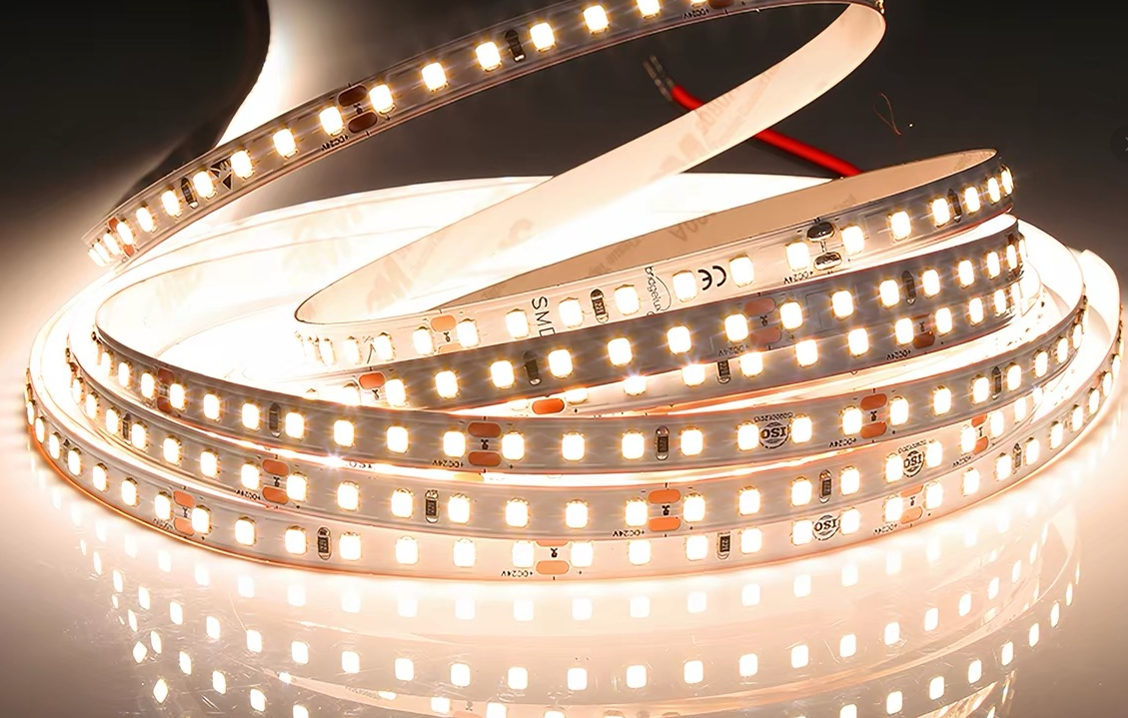
Direct installation means applying the LED strip to a cabinet, shelf, ceiling recess or mounting surface without using an aluminum profile. The adhesive backing is normally used to hold the strip in place.
This method is simple, quick and economical. It may be suitable when the strip is completely concealed, the wattage is relatively low, operating periods are limited and the individual LED points are not visible from normal viewing positions.
However, the result depends heavily on the mounting surface. Wood, plasterboard and some decorative materials do not dissipate heat as effectively as metal. If heat remains around the LED strip for long periods, it can accelerate the ageing of the LEDs, flexible circuit board and adhesive backing.
2. What Does an Aluminum Profile Do?
With this method, the aluminum profile is fixed first, the LED strip is placed inside it, and a clear or opal diffuser is fitted over the profile.
An aluminum profile can serve three practical purposes:
- It provides a larger surface through which heat can be released.
- It protects the LED strip from dust, light contact and accidental damage.
- It supports a cleaner, more finished linear-lighting appearance.
The profile does not make the LED strip brighter. Its value lies in providing a more controlled installation and, when the strip is in good contact with the profile, a better path for heat dissipation.
3. How Does the Installation Method Affect the Lighting Effect?
An uncovered LED strip usually shows a row of individual light points. These points become more noticeable when the strip is installed close to a visible edge or can be seen directly.
A diffuser spreads the light before it leaves the profile. This softens the appearance of the individual LEDs and can create a more continuous line of light.
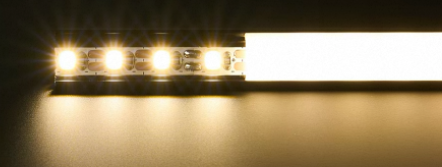
A diffuser does not always remove every visible light point. The final result also depends on:
- the number of LEDs per meter;
- the distance between the LEDs;
- the depth of the aluminum profile;
- the distance between the LED strip and diffuser;
- the diffuser material and transmission rate; and
- the viewing distance and installation position.
A shallow profile combined with a low-density LED strip may still show visible dots. COB LED strips have more closely spaced emitting points and are often better suited to continuous linear effects, but the installation depth and diffuser still need to be considered.
4. Why Can an Aluminum Profile Help with Heat Dissipation?
LED strips generate heat while operating. The actual temperature depends on power per meter, installation conditions, ambient temperature and how long the strip remains on.
When the back of the LED strip makes good contact with the aluminum profile, heat can pass from the flexible circuit board into the profile and spread across a larger surface area. This normally provides better thermal conditions than attaching the strip directly to wood or plasterboard.
Simply adding a profile does not guarantee low operating temperature. Thermal performance also depends on the profile’s size and thickness, the contact between the strip and profile, ventilation around the installation, actual input power and ambient temperature.
For higher-power LED strips or installations that operate for many hours each day, sample testing under the intended installation conditions is recommended.
5. Does a Diffuser Reduce Light Output?
A diffuser softens and redistributes the light, but it also absorbs or blocks part of the output. The amount of light loss varies with its material, color, thickness and transmission rate.
A clear cover normally allows more light through but provides less diffusion. An opal cover produces a softer and more uniform appearance, although the measured output may be lower.
The right choice depends on the project. Display shelves may prioritize illuminance, while decorative linear lighting may prioritize an even line of light and visual comfort.
6. How Do Different Color Temperatures Affect the Result?
Common LED strip options include 3000K, 3500K, 4000K and 6000K. Color temperature changes the appearance and atmosphere of the light; it does not, by itself, indicate brightness, color-rendering quality or product grade.
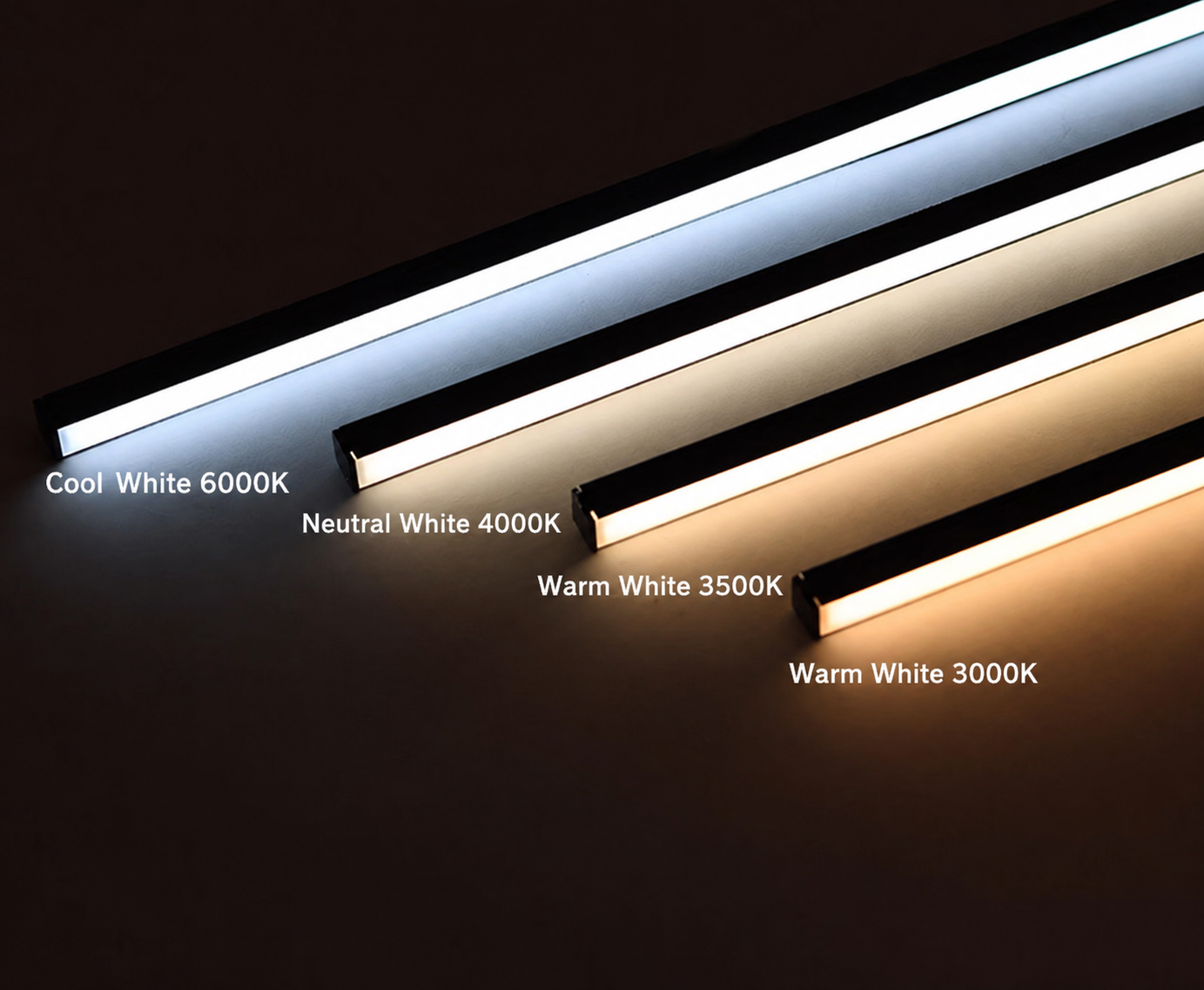
- 3000K warm white: commonly selected for bedrooms, villas, hotels, restaurants and relaxed hospitality spaces.
- 3500K warm white: provides a balance between warmth and visual clarity.
- 4000K neutral white: often used in kitchens, offices, display cabinets and commercial interiors.
- 6000K cool white: creates a cooler, brighter-looking appearance for functional areas where a crisp visual effect is preferred.
The final selection should also consider interior finishes, wall colors, surrounding luminaires and the intended atmosphere.
7. When Can Direct Installation Be Considered?
Direct installation may be suitable when:
- the LED strip has relatively low power per meter;
- the strip is used for shorter operating periods;
- the strip is fully concealed from view;
- visible LED points are acceptable;
- the mounting surface can provide adequate support and reasonable heat transfer; or
- the project is a temporary display or has strict cost limitations.
The surface should be clean, dry and smooth before installation. Dust, oil, uneven finishes and textured surfaces can reduce the holding strength of the adhesive backing. Mechanical clips or additional fixing methods may be required in some installations.
8. When Is an Aluminum Profile Recommended?
An aluminum profile is generally the better option when:
- the LED strip operates for extended periods;
- power per meter is relatively high;
- the strip is installed in a cabinet, shelf or product display;
- the light source may be visible from normal viewing positions;
- the project requires a softer, more continuous line of light;
- the strip needs protection from dust or contact; or
- the installation is part of a hotel, restaurant, retail or other professionally finished interior.
In these projects, the aluminum profile is not only a decorative accessory. It is part of the complete LED strip installation system.
9. What Should Be Confirmed Before Ordering?
Before selecting an LED strip and installation method, confirm the following:
- installation position and total length;
- power per meter and total system power;
- operating voltage and driver location;
- dimming or control requirements;
- profile dimensions and mounting method;
- required corners, connectors, end caps and cables;
- whether the light source will be directly visible;
- expected daily operating time and ambient temperature;
- voltage drop and power-feeding method for long runs; and
- access for future maintenance or replacement.
For long LED strip runs, total wattage is not the only consideration. Cable size, driver capacity, voltage drop and power-feed points must also be planned correctly.
Before a volume order, test the actual LED strip, aluminum profile, diffuser and driver together. This allows the buyer to check brightness, color temperature, visible LED points, operating temperature and the finished lighting effect.
Conclusion
Direct installation is simple and economical. It can work for concealed, lower-power applications where operating time and visual requirements are limited.
An aluminum profile can provide better protection, a more controlled thermal path and a cleaner linear-lighting finish. It is normally the more suitable choice for long operating hours, visible installations and residential or commercial projects with higher finishing requirements.
Neither method is correct for every project. The appropriate solution depends on power per meter, installation surface, operating time, viewing position and the required lighting effect.