
Hotel Corridor Lighting Case Study: Choosing Anti-Glare LED Downlights for Better Comfort
Introduction
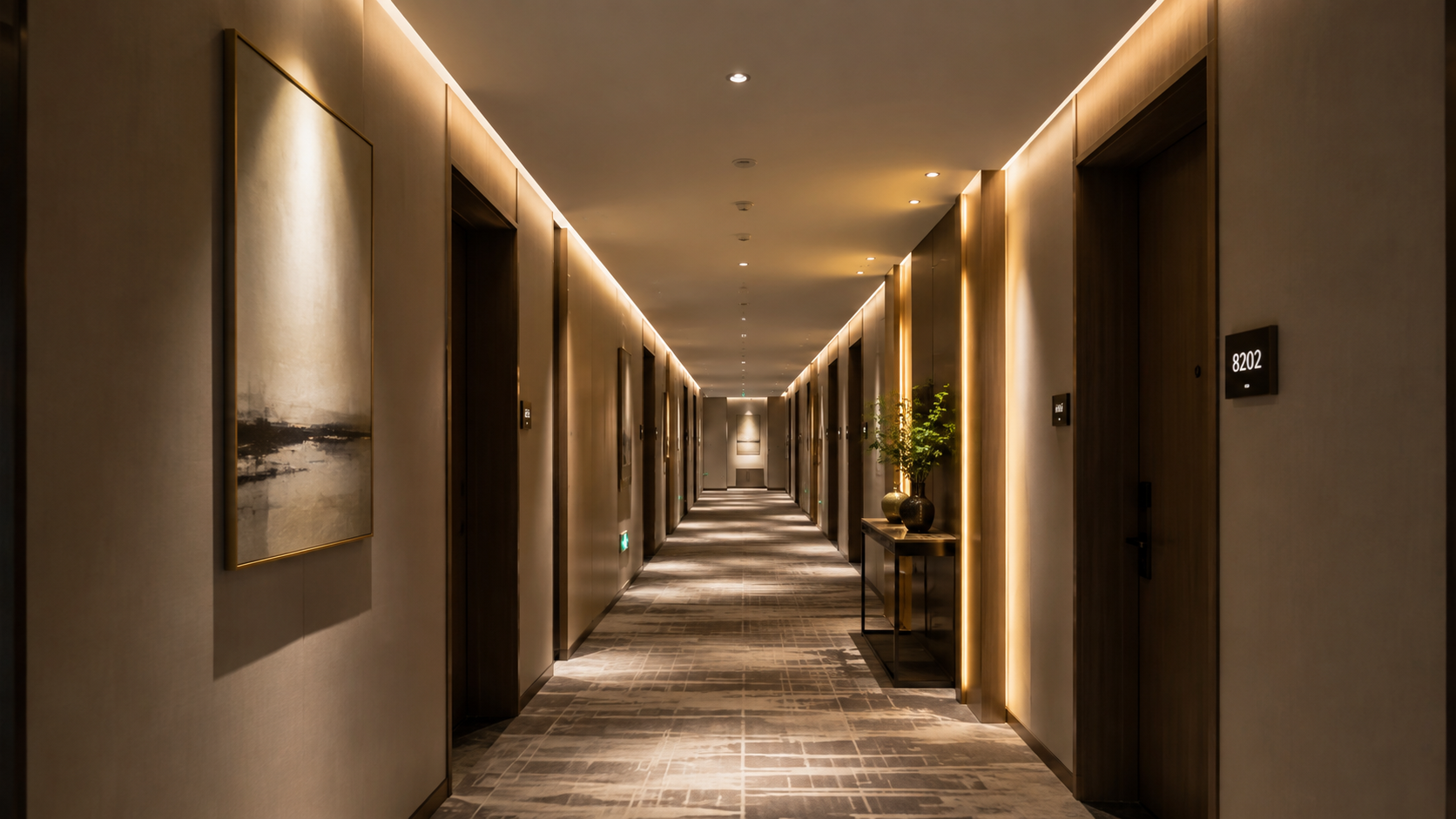
Hotel corridors are more than just passageways—they are an important part of the guest experience.
Guests walk through these spaces many times a day, often late at night or early in the morning. Poor lighting can create glare, uneven brightness and visual discomfort, making even a luxury hotel feel less inviting.
This case study explains why anti-glare LED downlights are widely used in hotel corridors and how the right lighting design improves both guest comfort and project quality.
Project Requirements
The project required a lighting solution that could provide:
- Comfortable visual experience
- Uniform corridor illumination
- Reduced glare
- Warm and welcoming atmosphere
- Low maintenance
- High energy efficiency
The design objective was not simply to increase brightness, but to create a comfortable environment for guests.
Why Anti-Glare Downlights Were Chosen
Unlike standard downlights, anti-glare LED downlights use a recessed light source and precision optical design to reduce direct glare.
Instead of exposing the LED chip, the light source is positioned deeper inside the reflector, allowing the light to illuminate the floor and walls without causing visual discomfort.
This creates a cleaner ceiling appearance and a more premium lighting experience.
Lighting Design Considerations
Several factors were considered during the lighting design process:
- Ceiling height
- Fixture spacing
- Beam angle
- Color temperature
- Color rendering index (CRI)
- Glare control
These parameters work together to create balanced and comfortable corridor lighting.
Recommended Specifications
For most hotel corridor projects, the following configuration provides excellent results:
- Color Temperature: 3000K
- CRI: Ra90 or above
- Beam Angle: 36°
- UGR: Low-glare design
- Driver: Flicker-free LED driver
These specifications create a warm, comfortable and professional lighting environment.
Common Mistakes
Some common lighting mistakes include:
- Using fixtures with exposed light sources
- Installing fixtures too far apart
- Selecting the wrong beam angle
- Using cool white lighting throughout the corridor
- Ignoring glare control
These issues often reduce visual comfort and make the corridor feel less welcoming.
Project Results
After installation, the corridor achieved:
- Uniform illumination
- Comfortable visual experience
- Reduced direct glare
- Better wall brightness
- Premium hotel atmosphere
The lighting not only improved visibility but also enhanced the overall interior design.
Conclusion
Successful hotel corridor lighting is not determined by brightness alone.
By combining anti-glare LED downlights, appropriate beam angles, warm color temperatures and professional lighting layout, designers can create corridors that are comfortable, efficient and visually appealing.
A well-designed corridor not only improves guest comfort but also enhances the overall impression of the hotel.