
LED Lighting Export Buyers in 2026: What Matters Beyond Price
In the LED lighting export market, price has always been a key factor. Importers, wholesalers, contractors and project buyers need competitive costs to stay profitable. However, in 2026, many buyers are paying more attention to the total value of a lighting product, not only the unit price.
This change is easy to understand. LED lighting products are used in real buildings, retail spaces, hotels, offices and residential projects. If the product has unstable color, poor driver quality, uncomfortable glare or unclear documentation, the final cost can become much higher than the original quotation difference.
Price Is Important, But It Is Not the Whole Decision
When comparing LED downlights, track lights, strip lights or spotlights, buyers often receive many quotations with similar product names. At first glance, the lower price may look attractive. But two fixtures with the same wattage and similar appearance can perform very differently in real projects.
The difference may come from LED chip selection, driver quality, housing structure, optical design, heat dissipation, reflector material, packaging and testing process. These factors affect brightness, lifespan, installation experience and after-sales risk.
Optical Comfort Is Becoming More Important
Modern lighting projects are no longer focused only on making a space bright. Hotels, villas, restaurants, retail stores and offices all need comfortable lighting. This is why buyers are paying more attention to glare control, beam angle, reflector color, and fixture depth.
For example, anti-glare LED downlights can help reduce visible brightness from the light source and create a more comfortable visual environment. In premium spaces, this can be more valuable than simply choosing the highest lumen output. Buyers who want to understand this topic can read our guide on anti-glare LED downlights.
Stable Drivers Reduce Project Risk
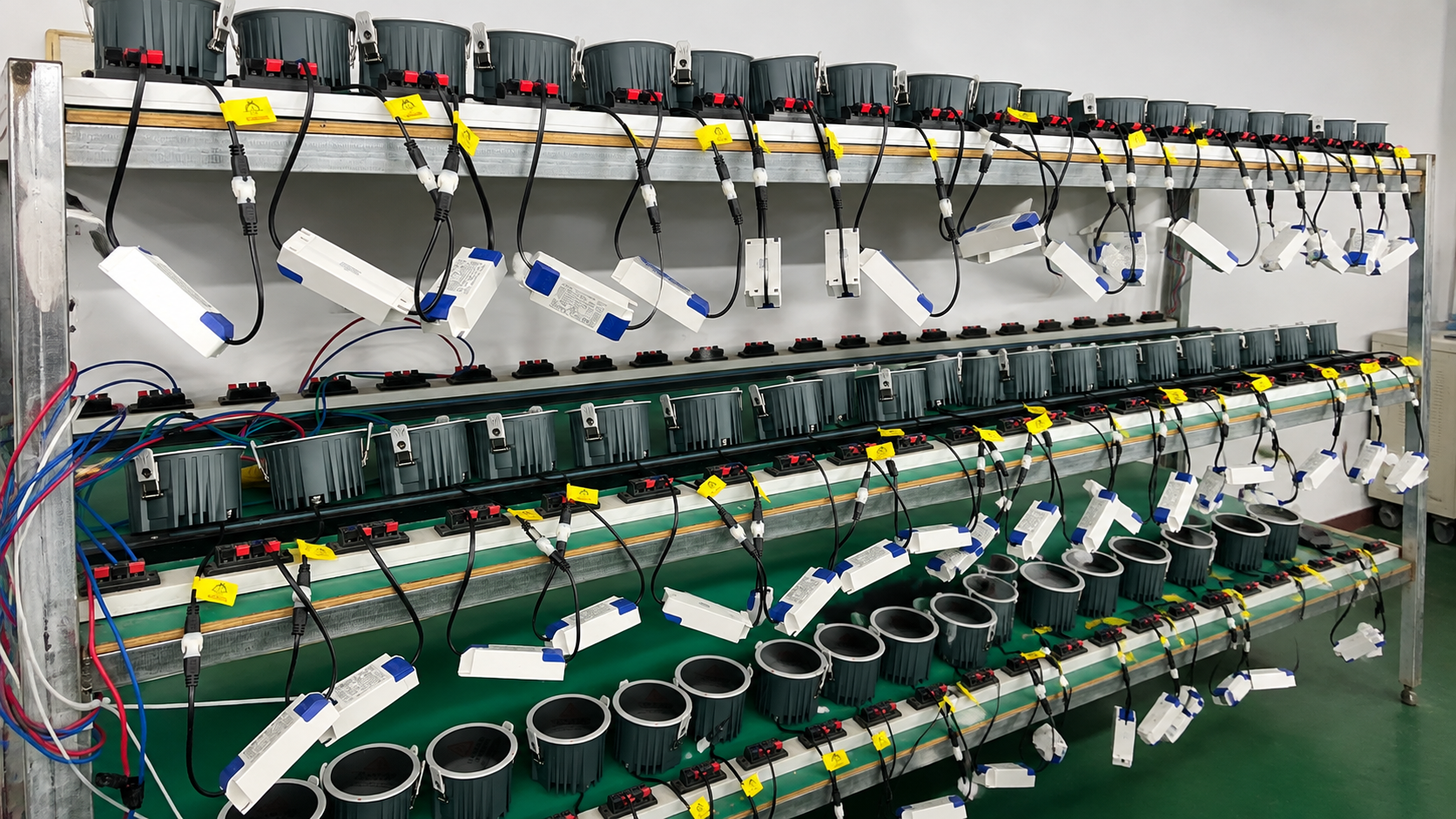
The LED driver is one of the most important parts of a fixture. A poor driver may cause flicker, unstable brightness, shorter lifespan or compatibility problems with dimming systems. For project buyers, driver problems can lead to replacement cost, installation delays and customer complaints.
When sourcing LED lighting products, buyers should ask about driver specifications, dimming compatibility if required, power factor, flicker performance and long-term stability. A slightly lower product price may not be worth it if the driver creates after-sales issues later.
Clear Product Data Helps Buyers Sell and Install
Good product data is becoming more important for export buyers. Distributors need product specifications for catalogs and sales pages. Contractors need installation information for project planning. Designers need beam angle, CCT, CRI and lumen data to compare lighting effects.
A reliable supplier should provide clear product information, including wattage, lumen output, color temperature, beam angle, cutout size, installation method, housing color and packaging details. This helps buyers communicate with their own customers more professionally.
Customization Still Matters for Different Markets
Different markets may prefer different lighting styles. Some buyers focus on high efficiency, while others need stronger glare control. Some projects require black reflectors, while others prefer white reflectors for higher output. Color temperature, housing color and packaging requirements can also vary by region.
This is why OEM and ODM support remains important. Buyers should look for suppliers who can discuss project needs, sample details and market positioning instead of only sending a standard price list.
Communication Speed Affects Delivery
In export business, communication is part of the product experience. Fast and clear communication can help confirm drawings, packaging, samples, production schedule and shipping details. Slow or unclear communication can create delays even when the product itself is acceptable.
For project orders, buyers should confirm key details early: product model, quantity, color temperature, beam angle, reflector color, driver, dimming type, installation accessories, packaging and delivery schedule. Clear confirmation reduces mistakes and keeps the project moving.
Conclusion
In 2026, LED lighting export buyers still care about price, but they are also looking at stability, optical comfort, documentation, customization support and supplier communication. A low quotation is only valuable when the product can perform reliably in real projects.
For buyers sourcing LED lighting products, the better approach is to compare total value. The right supplier should help reduce project risk, support product selection and provide stable lighting solutions for long-term business.